

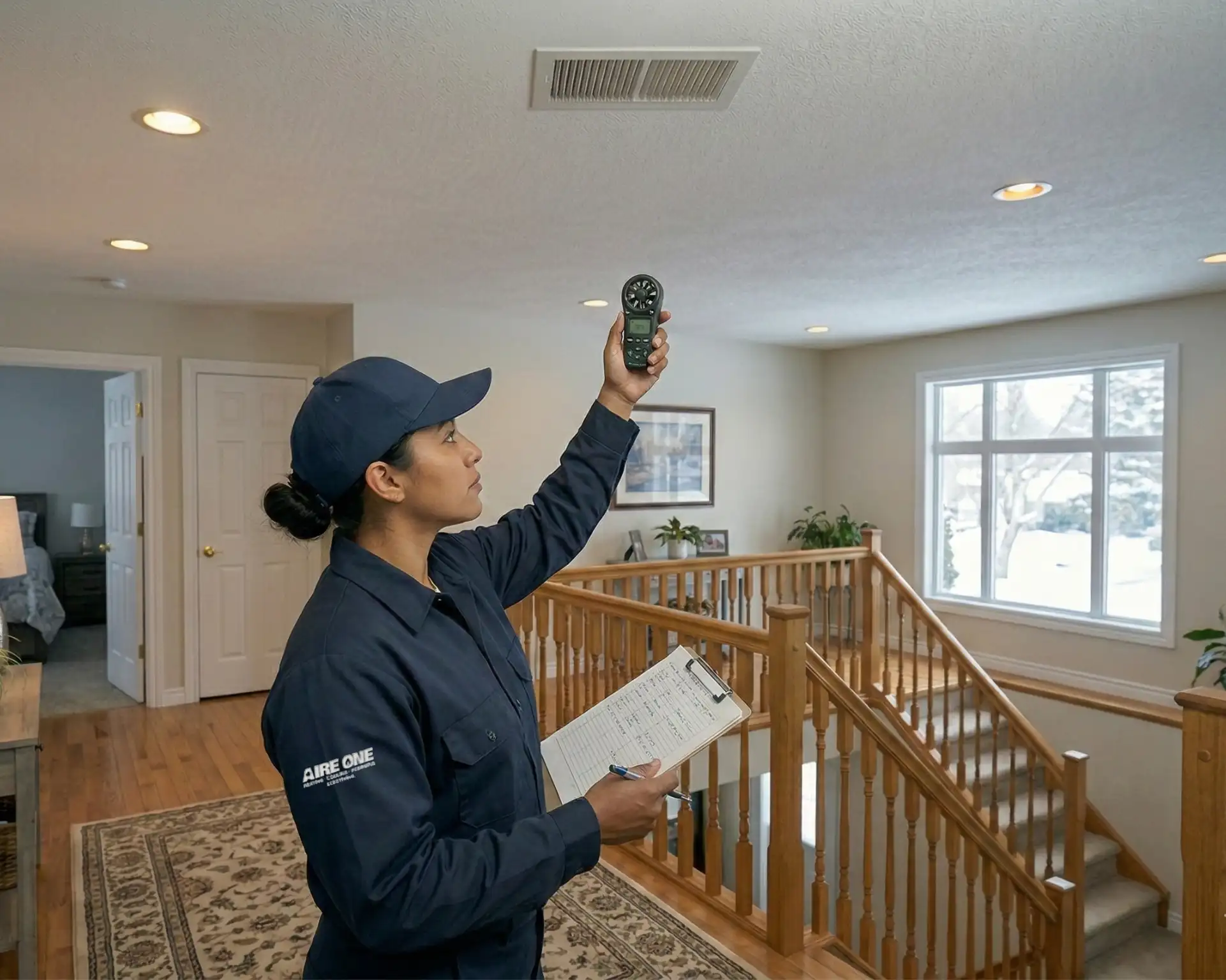

Uneven heating in winter often shows up as “cold upstairs, warm downstairs”—and it’s usually an airflow problem, not a lack of heat. In most homes, the root cause is a combination of stack effect (warm air rising), return-air limitations upstairs, and duct or airflow imbalance that prevents heat from distributing evenly. In this guide, you’ll learn the most common reasons uneven heating happens, quick checks you can do in minutes, and the fixes that actually work to balance temperatures between floors.
Quick answer: Uneven heating in winter is usually caused by stack effect, poor return-air upstairs, or airflow/duct imbalance. Start with thermostat and vent balancing, then check airflow restrictions like filters. If the issue persists, you likely need airflow diagnostics.
Common causes:
- Duct/airflow imbalance
- Stack effect
- Weak return air upstairs
What Causes Uneven Heating in Winter?
Uneven heating usually comes down to one of three things:
- Heat naturally rises (stack effect)
Warm air rises, and winter pressure differences can push warm air out up high while pulling colder air in down low (stack effect). But the final result depends on airflow and return vents—some homes feel warmer upstairs, while others feel colder upstairs. - Airflow isn’t balanced
Your system may be producing heat just fine, but air isn’t being delivered (or returned) evenly. This is common when certain rooms have weak supply airflow—or when upstairs return vents can’t “pull” air back properly. - Ductwork or system performance issues
Leaks, loose duct connections, crushed ducts, dirty components, or incorrect fan settings can reduce airflow—so some rooms heat well and others never catch up.
A Quick Reality Check (It’s Not Always “Your Furnace”)
Before you assume something is broken, ask:
- Is it one room that’s cold—or the entire upstairs?
- Does it happen only on the coldest days, or all winter?
- Are you feeling weak airflow from upstairs vents, or is airflow strong but air is lukewarm?
Your answers point to different fixes.
Quick Fixes You Can Try Today (10–15 Minutes)
1) Check your thermostat basics (simple but important)
- Make sure you’re not running an aggressive “setback” schedule (big temperature drops overnight). If the system has to recover a lot in the morning, the downstairs can warm faster while upstairs lags.
- If you have a smart thermostat, confirm the correct system type is selected (furnace vs heat pump, etc.).
Pro tip: If you’re constantly bumping the temperature up and down, you’ll often notice bigger temperature swings between floors.
2) Switch the fan setting for better mixing (when it helps)
If your thermostat has FAN = ON, try running it for a few hours during the day. This can help mix air between floors and reduce hot/cold layering.
- If your home gets dry or you notice drafts, switch back to AUTO and use ON only in short blocks (for example: 30–60 minutes at a time).
3) Don’t “choke” your vents—balance them gently
A very common mistake is closing vents downstairs completely to “force” air upstairs. That can create higher pressure in the duct system and make airflow worse overall.
Instead:
- Keep downstairs vents partly open
- Open upstairs vents fully
- Make small changes and wait a day to feel the difference
4) Check airflow restrictions (the quiet performance killer)
If airflow is weak, start with the easiest culprit: the filter. A clogged filter restricts airflow and often makes temperature differences worse—especially upstairs.
If you’re not sure how often to change it, follow a simple replacement routine like in this HVAC air filter guide.
One of the Most Common Hidden Causes: Poor Return Air Upstairs
Most homeowners focus on the vents that blow warm air out (supplies). But return air is what brings air back to your system to be reheated.
If upstairs return vents are:
- blocked by furniture,
- covered by dust buildup,
- too few for the floor plan,
- or missing in key areas,
…your upstairs can stay colder even if the furnace is working well.
Quick check:
Hold a tissue near the return grille upstairs. If it barely pulls, your system may not be circulating air effectively upstairs.
When Uneven Heating Is a “Duct” Problem (Not a Heating Problem)
Uneven heating often happens when:
- duct joints are leaky,
- duct runs are too long to certain rooms,
- older duct tape is peeling,
- or ducts are crushed / disconnected in basements or mechanical areas.
If you also notice dust that returns quickly, musty smells, or airflow that feels inconsistent room-to-room, a professional inspection plus duct cleaning can help remove buildup that restricts airflow—especially if it’s been a long time since the ducts were serviced or you’ve recently renovated.
Signs You Likely Need a Pro (And It’s Worth It)
If you’ve tried the quick fixes and still deal with uneven heating, the cause is usually something a technician can measure and confirm—rather than guess:
- Upstairs vents blow weak air even when downstairs is strong
- Temperature difference between floors is consistently 3–5°C or more
- Furnace cycles frequently, runs long, or struggles to keep up
- Some rooms are always cold no matter what you do
- You suspect duct leakage or an airflow imbalance
At that stage, a proper diagnosis often includes checking blower performance, temperature rise, static pressure, duct conditions, and airflow delivery room-by-room.
If you need help, it’s best to schedule a visit with a team that can troubleshoot airflow and heating issues properly—this is exactly what our furnace repair service is designed to do when comfort problems show up in winter
Prevent Uneven Heating from Coming Back Next Winter
Once your home is balanced, keep it stable with a few habits:
- Change filters on schedule
- Keep return vents open and unobstructed
- Avoid huge thermostat setbacks
- Don’t fully close vents (balance gradually)
- Consider a professional checkup if your system is older or comfort has been declining
Frequently Asked Questions
Fix Uneven Heating in Kitchener-Waterloo — Book a Service Visit
If the issue feels deeper than thermostat settings, it often comes down to airflow balance, duct performance, or system setup. Aire One KW provides reliable HVAC services in Kitchener-Waterloo, Cambridge, Guelph, and nearby areas, and we’ll pinpoint the real cause and recommend the most effective solution—satisfaction guaranteed. Get started today.