

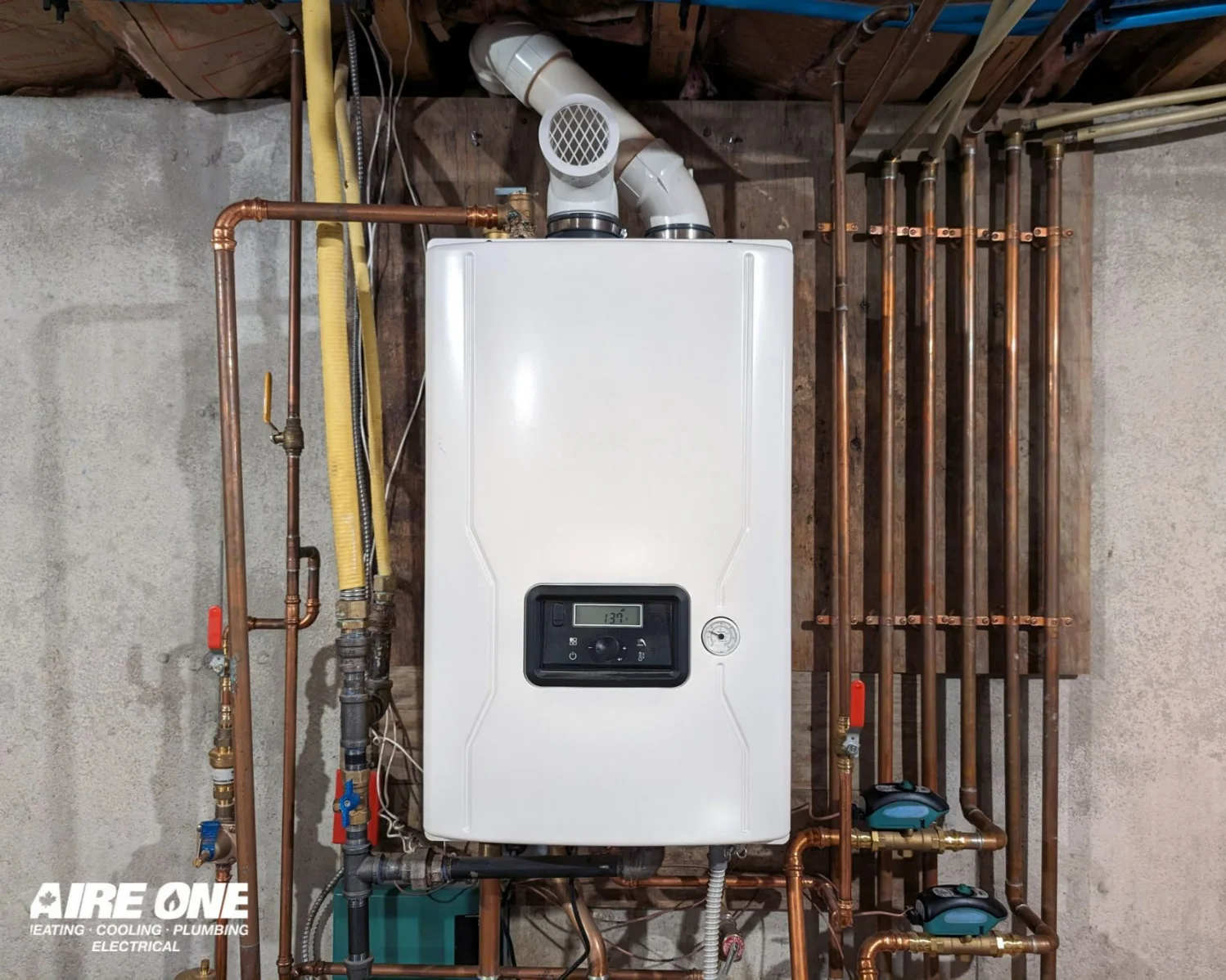

If you’re looking for a new hot water system in Ontario, tankless water heaters are worth considering. Many homeowners in Kitchener, Cambridge, and Guelph are switching for energy savings, long life, and compact size. But like any home upgrade, they come with trade offs.
This guide, provided by our professionals at Aire One KW, explains tankless water heater pros and cons, how they work, what they cost, and why local water conditions matter. Let’s begin!
How Tankless Systems Work?
A tankless water heater heats water only when you need it. Cold water passes through a heat exchanger powered by gas or electricity. In seconds, it’s hot and ready to use.
There’s no storage tank, so you never pay to keep water hot when no one’s using it. This on-demand design is the main reason people switch.
Energy and Cost
Benefits:
Only heats water when needed, saving energy.
Lower monthly gas or electricity bills for smaller households.
Gas models often give the best balance of cost and performance over time.
Drawbacks:
Unit prices start around $1,000 and can exceed $3,000.
Installation can be more expensive if upgrades are needed for gas lines, venting, or electrical service.
If you plan to live in your home for many years, the energy savings can make up for the higher initial price. And Ontario rebates can help.
Space and Lifespan
Benefits:
Compact, wall mounted design frees floor space.
Works well in condos, basements, or small utility areas.
Can last over 20 years about twice as long as a tank heater.
Drawbacks:
Placement must allow for venting or electrical access.
Outdoor installations need freeze protection in Ontario winters.
If you plan to live in your home for many years, the energy savings can make up for the higher initial price. And Ontario rebates can help.
Flow Limitations
A tankless heater delivers continuous hot water but only up to its rated flow. Running the shower, dishwasher, and laundry at the same time can lower water temperature.
Tip: For bigger homes, consider a high-capacity model or install more than one unit.

Installation and Cost
Older homes in Kitchener, Cambridge, and Guelph may need upgrades before installing a tankless system. A licensed HVAC company can check your setup, size the right unit, and make sure installation meets code.
Typical Costs:
- Tankless water heater unit: $1,000–$3,000
- Installation: $500–$1,500
- Tank water heater unit: $500–$1,500
- Tank installation: $300–$700
Maintenance Needs
Ontario’s water is often hard, especially in Kitchener-Waterloo. Minerals like calcium can clog the heat exchanger in a tankless system.
Yearly maintenance includes:
- Descaling the system to remove mineral buildup.
- Cleaning the inlet filter.
- Checking burners (for gas models).
- A water softener can reduce scaling and extend lifespan.
Ontario Value-Add Benefits
Rebates and Incentives
Take advantage of significant savings with these programs:
- Canada Greener Homes Grant: Access up to $5,000 for energy-efficient home upgrades, including tankless water heaters.
- Enbridge Gas Rebate: Eligible households can receive up to $1,650 toward qualifying tankless units, reducing upfront costs.
Installer Expertise Matters
Partnering with a skilled HVAC contractor ensures you maximize rebates and select the ideal tankless unit for your home’s water demands and plumbing setup. Their expertise simplifies the process and optimizes performance.
Hard Water Considerations in the KW Region
In areas like Kitchener, Waterloo, Cambridge, and Guelph, hard water is common and can impact tankless water heater efficiency. Regular descaling is essential to maintain performance and extend the unit’s lifespan.

Types of Tankless Water Heaters
Gas vs Electric
Gas
Higher flow rates, lower operating costs, needs proper venting.
Electric
Easier install, cleaner energy, may require panel upgrades.
Condensing vs Non-Condensing Gas
Condensing
More efficient, cooler exhaust, can use PVC venting. Higher price but better efficiency.
Non-Condensing
Lower upfront cost but less efficient.
Whole-House vs Point of Use
Whole-House
Serves all fixtures. Best for families.
Point of Use
Small units installed close to sinks or showers for instant hot water in remote areas.
Tankless Water Heater Pros and Cons in Ontario!
Pros
Endless hot water when sized right.
Lower utility bills over time.
Eligible for rebates.
Cleaner, modern look.
Long lifespan.
Cons
High initial investment.
Flow rate limits.
Sensitive to hard water.
Needs yearly service.
May require home upgrades.
Is a Tankless Water Heater Right for You?
A tankless water heater works well for:
- Smaller households want to cut energy bills.
- Homes with limited space.
- Long-term owners are looking for a system that lasts decades.
It may not be ideal for:
- Large families running many fixtures at once (unless you install multiple units).
- Short-term housing where the payback time is too long.
The Benefits of Working with a Local HVAC Contractor!
Choosing the best tankless water heater Ontario has to offer isn’t just about the brand; it’s about the right size, type, and installation.
A skilled HVAC contractor in Kitchener, Cambridge, or Guelph can:
Recommend the right system for your water usage.
Set up a maintenance schedule for hard water conditions.
Handle installation to meet local codes.
If you’re ready for endless hot water, lower bills, and a compact system, a tankless water heater could be a smart choice. Contact a trusted HVAC company in your area to get expert advice, installation, and rebates that make the switch easier. Our professionals at Aire One KW are the ones you need! We know how to guide you to find your best possible unit and we will be there for you until the end of the process or even after that! Contact us today!
How big would the tankless water heater for a 3,000 sqft house with 7 people
Hi Steve!
For a 3,000 sq ft home with 7 people in Ontario (likely 3-5 bathrooms and higher simultaneous use), you’d typically need a tankless water heater rated for 8-11 GPM at our cold groundwater temperatures (around 70-80°F rise).
This handles multiple showers plus appliances running at once without running out of hot water. High-demand homes sometimes benefit from an even larger unit or two cascaded together.
Every setup is different, so we’d be happy to do a free in-home assessment to size it perfectly for your needs and habits.
Feel free to reach out — we’re here to help!